

I remember the first funeral I ever went to well. I was around eight or nine years old. It was my father’s colleague who had passed away prematurely from cancer. I didn’t really understand what was going on, other than we weren’t going to see Trish again. I was sad, but in a sudden burst of energy, I decided to dash up and down a corridor at the venue. I was quickly told off. That wasn’t appropriate. That wasn’t what you did at funerals, dear.
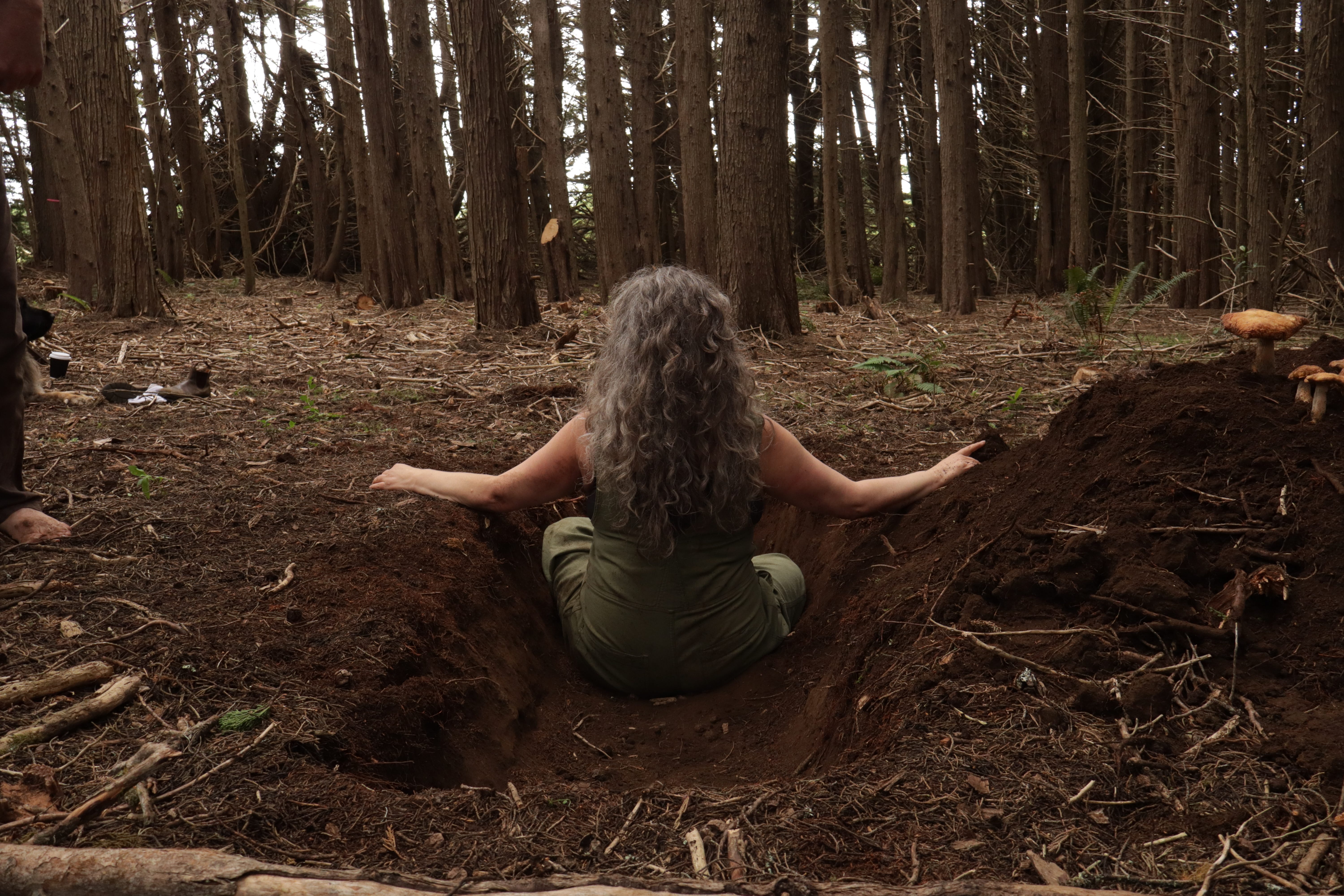
When I was younger, I’d taken it for granted that I hadn’t lost anyone close to me at an early age. But when I sat down with Sarah Hill, East Bay Doula for the Dying, an end-of-life doula based in California, I realised what a privilege that had been. “I lost my mum when I was four years old,” she told me. “I had no opportunity for death denial.”
The interviews I did with Sarah were nothing short of life-affirming experiences, filled with the joy of learning—the kind you only get from speaking to someone who has had a very different lived experience to you.
Here are my takeaways from our conversations:
Being comfortable talking about mortality can be a healing superpower
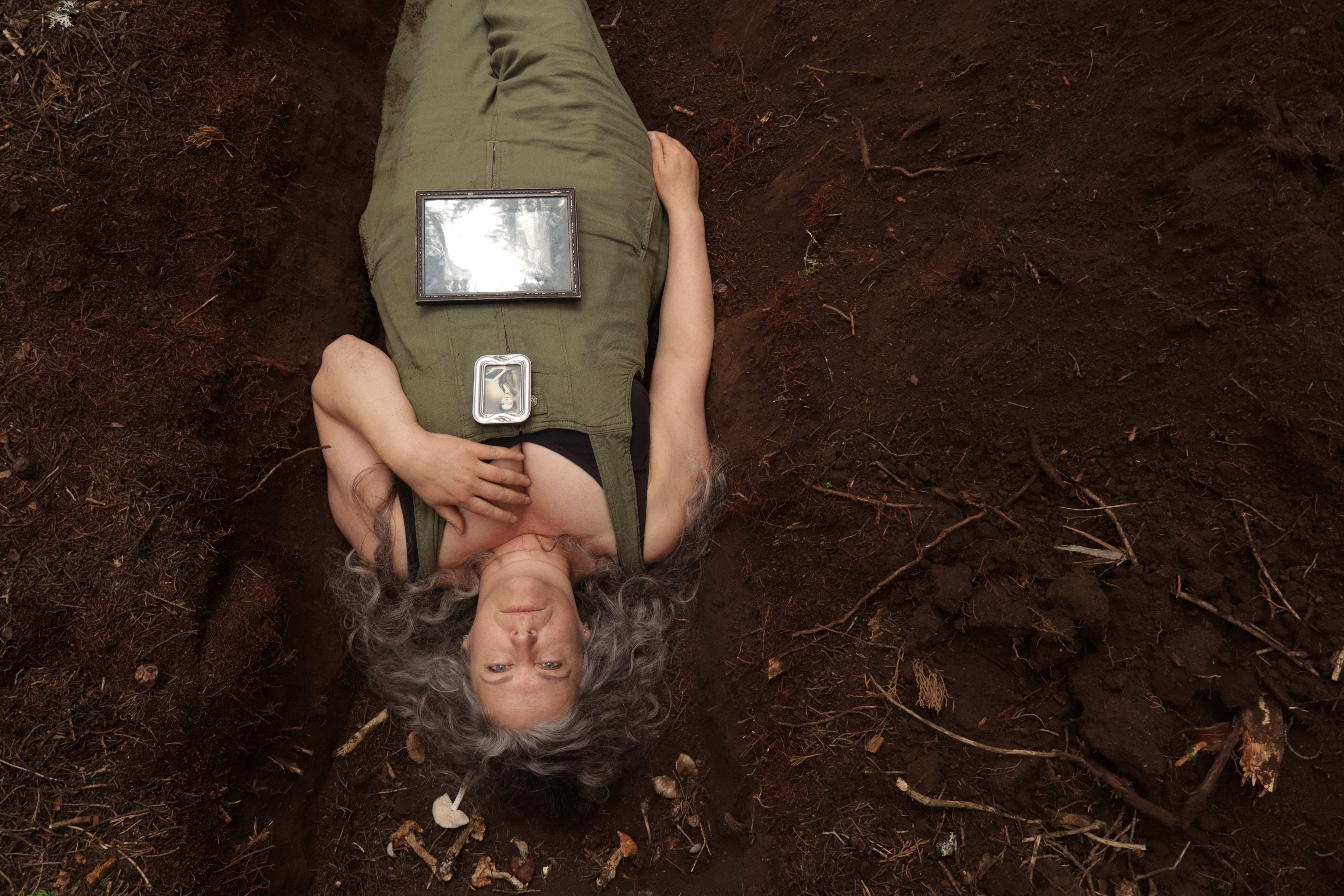
“So many of us, especially in Western culture, avoid thinking or talking about death and dying. And my younger life was characterised by thinking about it a lot,” Sarah explained. “I didn’t realise what a benefit that could be to others who were turning to face it for the first time.” This is so true. Too often, when you bring up anything death-related, you’re met with, “Well, that’s a bit morbid.” Well, either that or a grimace and a swift exit. Forgive the pun, but we are all going to exit at some point, aren’t we? Being able to talk about it before it actually happens can be a strange comfort.
Funerals don’t have to be doom and gloom
“My approach is to always make sure that we are honouring the person in a way that’s commensurate with how they would want to be remembered and how they lived their life,” Sarah, who is also a funeral officiant, told me. She went on to tell me how a family she had worked with wanted to honour the life of a larger-than-life loved one, who loved being out on the water. Together, they conceived the idea of releasing his ashes in a custom-built cremains cannon. “We had spent a few hours out on the water just telling stories and remembering and honouring him with his family. It was beautiful. And then, when it came time to shoot the cremains out of the cannon, what was so amazing was — because it was done in a few shots — I saw the entire emotional arc. (…) It wasn’t this kind of formal, perfunctory thing where we follow this ritual, but we’re not actually in the ritual. I think doing something just slightly askew of expectation might help to put us in the moment.” And this is a good moment to do a shout-out to Rupert Callendar, the author of What Remains? Life, Death and the Human Art of Undertaking, who I interviewed for TOPIA magazine many moons ago. If you are interested in alternative funerals involving performance art and funeral pyres, this is a must-read.
People let their mask down in their final moments
“When I tell people what I do, they say, ‘How could you possibly do that work?’ They don’t understand the beauty that comes with dying and death,” Sarah said. Beauty was not something I had associated with death before, so I was all ears. “What I get to see is people without artifice,” she continued. “I see people at their quintessence: their essential selves. They have stripped away all of the nonsense. By the time I meet them, they’re getting really real. And there’s something so beautiful about the intimacy that I get to have both with my clients and those around them.” This made a lot of sense to me. So often, in life, we’re chasing goals— the house, the promotion, the relationship, the marriage, the baby, the career, the money. The list goes on. But the way I see it, that pressure encourages mask-building because when life feels scary, it’s natural to try to embody a stronger, more impressive version of ourselves that we feel can match the challenges ahead. But when your body is literally going to stop functioning, none of that artifice or pretence makes sense any longer.
Sometimes, people align their death with a purpose
“I only had two hours of conversation with this woman before she went into her active dying phase and we couldn’t talk any more. But what she was able to tell me in those two hours was really pretty incredible—about her life and what she hoped to accomplish in her death, how she wanted to pull those in her constellation of care closer, to help them heal their own fear of death,” Sarah told me. What this looked like in practice was spending time at her bedside, committing the lines of her hands to memory and telling her the impact she had had on their lives before the moment of death. “And when she did die, we didn’t move quickly. We kept her at home for twelve hours. Her family went and bought her favourite flowers (…) and we bathed her body and we anointed it with oil. We placed the flowers beautifully around her and we just sat together. I remember this beautiful moment when the brother-in-law said, ‘She looks like a goddess’.” Some people might read this and find it creepy. Sit with that feeling. Why do you feel that way? This conversation taught me a lot about my own discomforts and pushed my boundaries. I’m thankful for it.
Letting go could be a career change, but it could also be your last breath
Before being an end-of-life doula, Sarah used to work as a chief of staff to a CEO at a consulting firm. When she informed her boss that she would be leaving, her initial assumption was that Sarah would be going to a competitor. There was an element of shock. Sarah, too, found herself wondering whether letting go of a corporate career for an alternative career as an end-of-life doula was actually the right move. But it was a conversation with a friend that made her realise that it was time for her to embark upon a journey that was in greater alignment with her true calling. “I gave my friend this litany of reasons why I shouldn’t do this, and how it was going to be irresponsible to do this. I’m a mother. We’re providing for a child—all these different things came up for me. She listened very patiently, and then she said, ‘So, you’re going to sit at the bedside of the dying and tell them they can let go, that it’s OK, but you can’t let go? Let me know how that works for you.’ And that was the ticket for me. You know, this is one life that we live. I think I spent a lot of time trying to fit my circle self into a square. And it was painful because I wasn’t moving in alignment with what my heart was calling me to do.” That resonated with me. When I’ve forced myself to be something that I am not, it hasn’t led me in directions I was excited about. It left me feeling trapped. Letting go of societal and individual expectations is a valuable, brave thing to do. And death is a great teacher of that.
Being able to meet your dying time with a doula is a privilege. But you can always prepare.
Sudden deaths and freak accidents happen. Unless you have psychic powers, you probably don’t know what the end is going to look like for you. That’s why practices like death contemplation can be good ways of mentally preparing yourself and confronting your own mortality. This can be anything from planning your own funeral to meditating on death using a Tibetan-inspired wrist mala with a string of beads shaped like skulls and typically made of yak bone. “Every morning, when I woke up, I would put it on and start the morning by giving thanks for another day of life, which sets this intention for the coming day. You ask yourself, ‘How do I choose to use this day?’ It’s pretty powerful.” A book that Sarah recommended for anyone who wants to explore death contemplation further is A Year to Live: How to Live This Year as If It Were Your Last by Stephen Levine.
To be an end-of-life doula, you need to be calm when everyone around you is not
If you are considering becoming an end-of-life doula, consider the following before doing your training: “Am I really wanting to be a death doula so I can go and support others in their dying time? Or am I just curious about this path because I’m curious about death? You know, it might be a bit of both. And that’s OK. But having clarity about what is motivating you to do this is important because sometimes, people are curious about it and maybe even have a little fantasy around it. But make no mistake. This is hard work. This is true death. People do die. And that’s just something to really sit with. Is this the kind of work where I can be the calmest person in the room? Am I able to ground myself and truly be of support to others? Can I leave my story at the door and just be the container for their experience? Questions like those are good ones to ask prior to venturing into this, but I think you learn a lot about whether or not this work is for you by going through the training.
*You can read one of the interviews I did with Sarah here. Shout-out to Lisa Goldapple for commissioning that story, which I genuinely learned so much from writing. The other interview with Sarah is due to come out in an upcoming issue of Spotlight (ZEIT SPRACHEN) magazine, so keep your eyes peeled. Thanks for being here and reading my words. If you are able to, do consider supporting my work in whatever way you can.
What a lovely piece. I like how you brought your own interpretation to complement Sarah's thoughts. This is off topic but I would love to hear your thoughts on the art of interviewing well, especially when it comes to sensitive topics.
My dog is dying. Yesterday a neighbor passed, and saw me sitting with my dog, who was lying and possibly dying directly on the grass. He said "put her to sleep, so she won't suffer". One short sentence, two lies. First, let's call things by name: the lethal injection is about killing. Second, the dog was not suffering. The neighbor was, because looking at the dying dog was painful to him and reminded him of his own death, soon. The same sentence, but saying the truth: "kill her, because I am in discomfort when looking". So that's a tiny illustration of the denial of death, the core tenet of our civilization. Sarah, the death doula from your story is doing the correct thing. More: we should all become more like her. Death is part of life and yes, it is beautiful.